
What Makes an Immersive Concert Experience

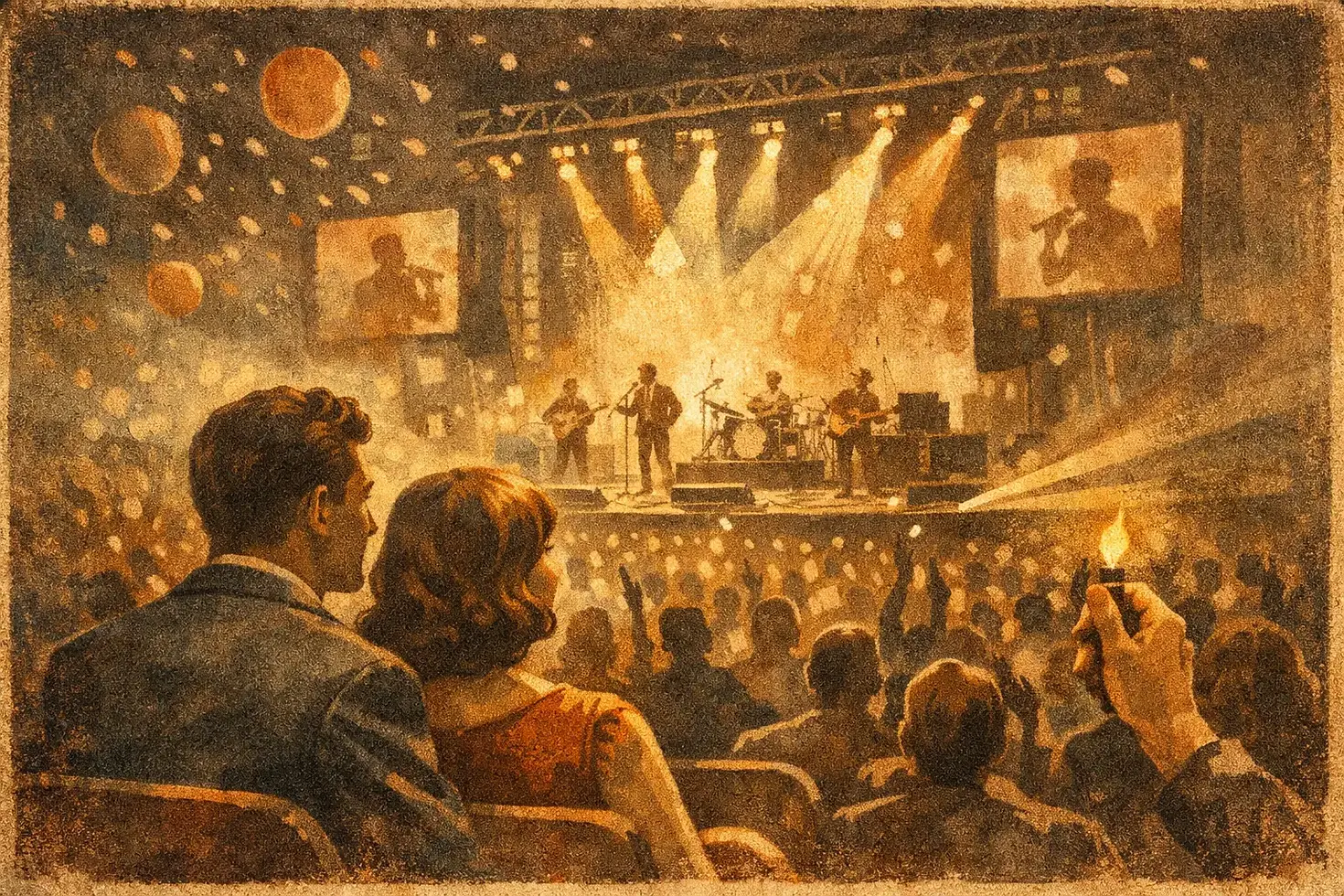
The lights drop before the first note lands. A hush rolls through the room. Then the stage ignites - not just with sound, but with movement, image, tension, and release. That is the difference between a night of live music and an immersive concert experience. You are not simply watching songs being played. You are being pulled into a world.
For audiences who want more than a standard gig, that difference matters. A strong voice, a tight band, and a familiar setlist can absolutely deliver a great night out. But when the music is fused with cinematic visuals, deliberate lighting, theatrical pacing, and emotional storytelling, the room changes. The performance stops feeling like a sequence of songs and starts feeling like an event with gravity.
That is why the phrase gets used so often now. But not every big show is truly immersive. Volume alone does not do it. Neither does a giant screen or a few dramatic lighting cues. A real immersive concert experience is built with intention. Every element onstage and in the room is there to heighten feeling, deepen attention, and make the audience feel inside the performance rather than merely in front of it.
An immersive concert experience is built, not added on
The strongest shows do not treat visuals, staging, and narrative like decoration. They make them part of the music itself. When that happens, each creative choice pushes in the same direction. The song, the lighting change, the choreography, the pacing between numbers, even the silence before the next entrance - it all carries the same emotional charge.
This is where many live productions split into two categories. One is a concert with extra production. The other is a fully immersive concert experience. The first can still be entertaining, but the added elements often sit beside the music rather than inside it. The second feels unified. Nothing appears random. Nothing feels pasted on for effect.
That unity is what audiences respond to. You may not leave talking about every technical detail, but you feel the difference in your body. The show has momentum. It has shape. It holds onto your attention because it knows where it is taking you.
Why story changes the whole room
A setlist can entertain. A story can transform.
That does not mean a concert needs spoken scenes, characters, or a literal plot. Story in live performance can be emotional rather than narrative. It can come through progression - how the opening builds expectation, how the middle stretches into conflict or intensity, how the final sequence lands with release. When a show understands its own arc, the audience stops experiencing isolated moments and starts experiencing a journey.
This matters even more when the music already carries nostalgia or emotional history. Familiar songs become more powerful when they are reframed inside a larger dramatic movement. A ballad can feel devastating after a sequence of high-energy numbers. A rock anthem can hit harder when the lighting, visuals, and arrangement make it feel like a turning point rather than just the next crowd favorite.
The best productions know this. They do not simply ask, what song comes next? They ask, what should the audience feel next?
The role of spectacle in an immersive concert experience
Let’s be honest - spectacle matters.
People buy tickets for excitement. They want the moment when the stage erupts, the screen pulses with color, the band surges forward, and the room feels electrically alive. There is nothing shallow about that. Spectacle is part of the pleasure of live performance. It gives scale to emotion. It tells the audience this night was built to be remembered.
But spectacle has a trade-off. When it is disconnected from the music, it can feel impressive for about thirty seconds and forgettable by the end of the night. Flash without purpose fades fast. The productions that stay with people use scale strategically. They know when to go enormous and when to pull everything back to a single voice, a single beam of light, a single breath before impact.
That contrast is where immersion deepens. If everything is huge all the time, the audience stops feeling surprise. If the show understands restraint, the big moments hit with far more force.
Sound is only the beginning
In a traditional concert, sound carries most of the burden. In a more ambitious production, sound is still the foundation, but it is no longer working alone.
Lighting tells the audience where to look and what to feel. Visual content can expand the stage beyond its physical edges. Movement onstage creates urgency and momentum. Costume and styling establish tone before a single lyric is sung. Even spacing matters - how performers occupy the stage, how close they come to one another, how the room breathes around them.
An immersive concert experience happens when these layers do not compete. They converge.
That is what makes large-format theatrical music productions so compelling. You are hearing the music, yes, but you are also reading visual cues, absorbing atmosphere, and tracking emotional shifts through design. It becomes a full-sensory encounter. The audience is not multitasking. They are locked in.
Why audiences want more than a standard gig
Live entertainment has become more selective. People do not go out just to fill a night anymore. They want a reason. They want a show that justifies the ticket, the travel, the planning, the babysitter, the dinner reservation, the whole event around the event.
That is exactly why immersive formats are gaining ground. They offer more payoff. For theatre lovers, they bring dramatic scale and visual intelligence. For rock fans, they preserve energy while elevating presentation. For audiences who love orchestral power, they add emotional depth and sweep. When those worlds meet, the result feels richer than a standard live set and more immediate than a traditional stage production.
It also makes the night more shareable, and not only on social media. People talk about these shows because they feel distinct. They remember the opening image, the transition that blindsided them, the finale that lifted the whole room. A forgettable concert fades by morning. An immersive one keeps replaying.
Not every audience wants the same kind of immersion
This is where nuance matters.
Some crowds want total theatricality - dramatic visuals, choreographed movement, bold costume, a big emotional arc. Others want immersion to come mostly through musicianship and atmosphere, with production enhancing rather than dominating. Neither preference is wrong. It depends on the audience, the material, and the venue.
A smaller room might benefit from intimacy and tension rather than constant visual overload. A major theater can hold larger imagery, broader staging, and more dramatic shifts in pace. Classic rock arrangements may call for grandeur and weight. More stripped-back material may need space and restraint.
The smart move is not throwing everything at the stage. It is choosing the level of theatrical intensity that fits the music and the room.
When orchestra, rock, and stagecraft collide
This is where things get thrilling.
Rock brings drive, edge, and release. Orchestra brings scale, texture, and emotional lift. Stagecraft brings shape. Put them together properly and the result is not a compromise between genres. It is a multiplication of impact.
A guitar riff feels bigger when strings surge beneath it. A vocal climax cuts deeper when the lighting, arrangement, and staging rise with it. A familiar anthem can suddenly feel cinematic, even dangerous, when the production is designed to turn the song into a scene rather than a performance slot.
That is the territory Australian Rock Orchestra plays in - where live music is treated as spectacle, memory, and theater all at once. It is more than volume. More than nostalgia. More than visual flash. It is the thrill of hearing songs you love delivered with dramatic scale and a sense of occasion.
The real test of an immersive concert experience
The real test is simple. Does the audience feel changed by the end of the night?
Not intellectually impressed. Not mildly entertained. Changed. Buzzing. Moved. A little stunned, maybe. As if they attended something larger than a playlist and more vivid than expectation.
That feeling comes from precision as much as passion. It comes from artists and creative teams who understand that every cue matters. Every transition matters. Every visual decision, arrangement choice, and burst of silence matters. Because immersion is not created by excess. It is created by alignment.
And when that alignment clicks, hold onto your seats. The room lifts. The songs hit harder. The applause feels less like politeness and more like release.
If you are choosing what kind of live night out deserves your time, look for the show that promises more than performance. Look for the one that wants to sweep you into its world and keep you there until the final note fades. That is where live music stops being background entertainment and becomes the night you will talk about all year.


Comments